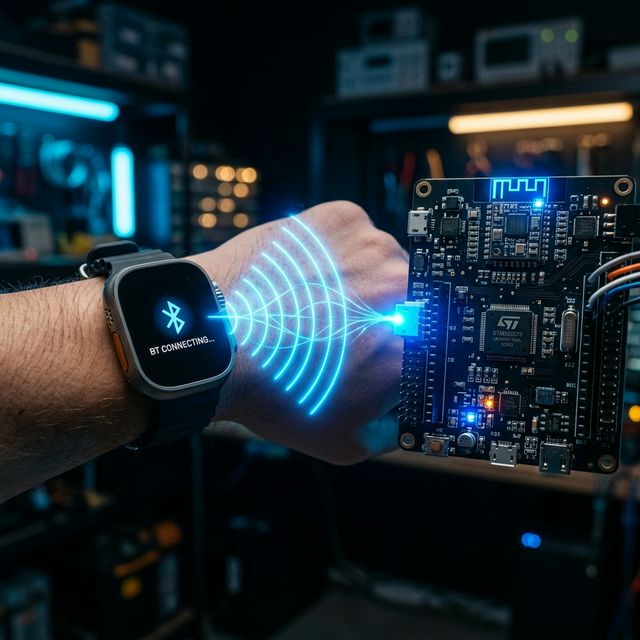
BLE projects fail less from protocol ignorance and more from timing and expectation mismatches.
Design choices that paid off
- Connection parameter hygiene: negotiate intervals for your real traffic pattern, not idealized demos.
- Payload discipline: avoid over-fragmented packets; design characteristic payloads around actual MTU behavior.
- Retry with context: reconnect logic should differentiate transient RF noise from persistent peer rejection.
Debugging approach
I got faster progress by pairing on-device logs with host-side timeline views. Seeing packet cadence, retries, and state transitions together removes a lot of guesswork.
Field lesson
A “working” BLE link in the lab can still be fragile in noisy environments. Build with explicit backoff, timeout reasons, and reconnect limits from day one.
Practical takeaway
BLE integration is a systems problem: radio, firmware scheduler, host behavior, and UX all interact. Tune the whole loop, not just the stack settings.
Comments are powered by GitHub Discussions.